
Some links in this article are paid affiliate links. If you purchase something through them, we may earn a commission at no additional cost to you. As an Amazon Associate I earn from qualifying purchases.
Check us out on Instagram and Facebook for more super-cool content! @undercoverdirtbags
We’ve all been there. You’ve spent days, weeks, months getting ready for a trip, you’ve got everything packed, and you’re feeling pretty good about yourself. Then you put your backpack on and wonder why it feels like somebody stuffed a small family of raccoons in there.
Where did all that weight come from?
Usually, it’s one of two things. Either the equipment you’re carrying is heavier than it needs to be, or you’re carrying too much of it. Quite often, it’s both.
Back in 2019, I wrote an article (READ IT HERE) about some last-minute ways to lighten your backpack without spending a bunch of money. Since then, I’ve put quite a few more miles under my feet, tried plenty of new equipment, and carried some things for hundreds of miles that I probably could’ve left sitting on a shelf at home.
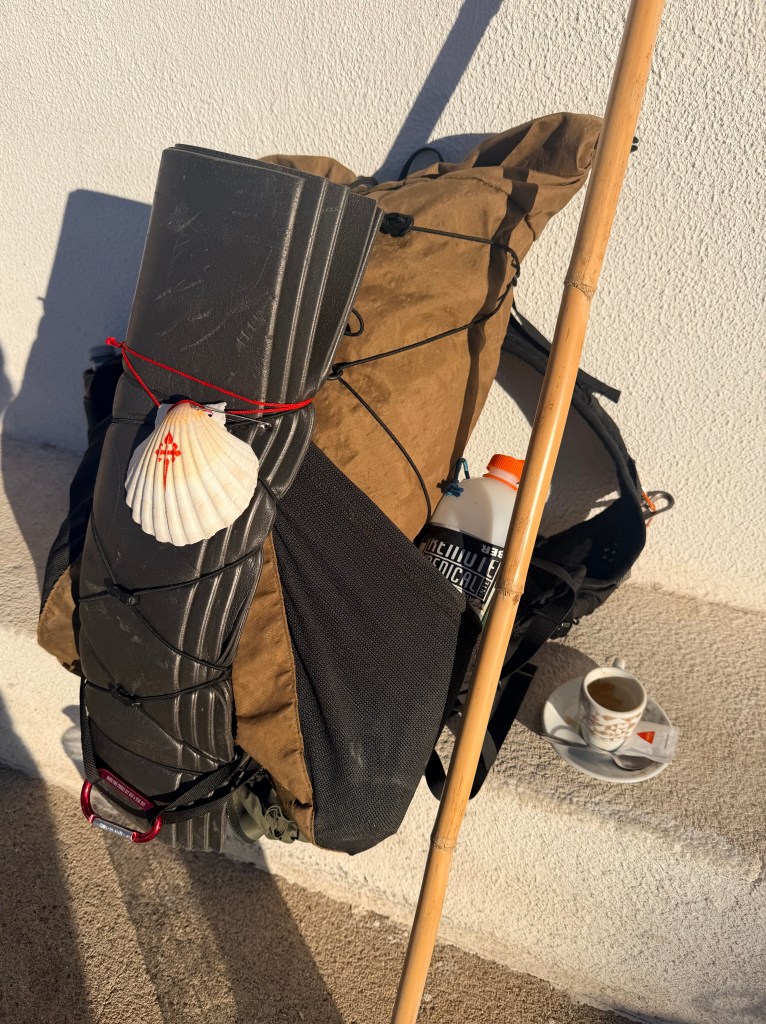
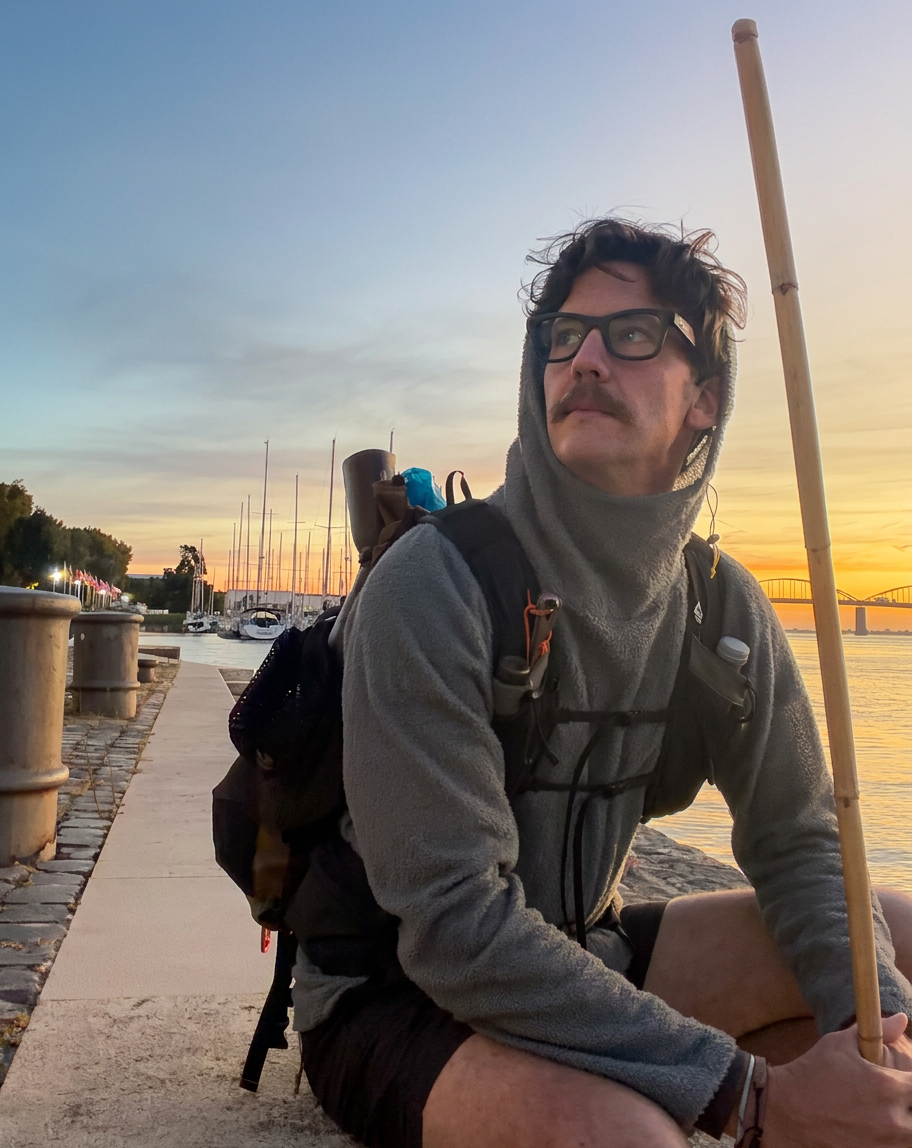
Most recently, I spent about a month traveling through Spain, Portugal, and France, including walking two different Camino routes. Everything I needed for that entire trip fit into a 30-liter backpack. My packed gear weighed about 11.5 pounds, not including what I was wearing, food, or water.
I’ve included the link to that video below.
That wasn’t because I went out and bought the most expensive ultralight equipment available. A lot of it came down to figuring out what I actually needed.
I still brought some unnecessary stuff, too. We’ll get to that.
Stop Packing Your Fears
There’s a saying in the backpacking world: Don’t pack your fears in your backpack.
I think this is probably one of the biggest reasons people carry so much unnecessary equipment.
What if it gets cold? What if it rains? What if I need another shirt? What if I get bored? What if I need to fix something? What if I need something I haven’t even thought of yet?
Pretty soon you’ve packed for every possible situation, including several that are extremely unlikely to happen.
Now, I’m not suggesting you leave behind equipment that’s important for your safety. There’s a difference between being prepared and carrying three pounds of random stuff because something might happen. But at the same time- really evaluate where you are going when it comes to safety essentials. I’ve seen people wearing bear bells and bear spray in areas where there are ZERO bears, and it was an easy search to find that information.
Research where you’re going. Look at the weather, terrain, water availability, and how far you’ll be from help or resupply. Pack for the conditions you’re reasonably likely to encounter, and have a plan for the consequences if something goes wrong.
For my Camino trip, I carried a sleeping bag liner because I wasn’t sure what to expect from the accommodations. Maybe I’d need bedding. Maybe I’d be cold. Maybe I’d end up sleeping somewhere I hadn’t planned.
I carried that thing across two countries and never used it once on the trail.
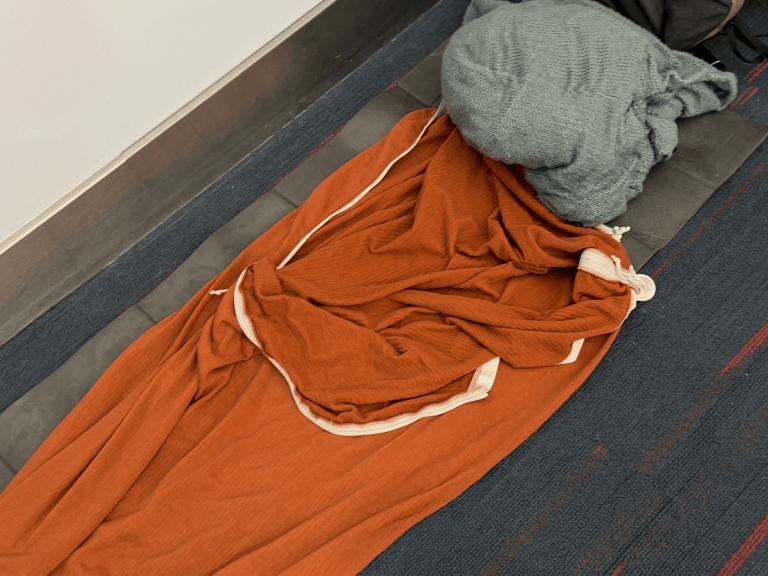
I did finally use it during a long overnight layover at JFK. So congratulations to my sleeping bag liner for making the international trip worthwhile by keeping me comfortable on an airport floor, for 4 hours.
Would I bring it on the Camino again? Not a chance.
Start With What You Already Own
Before you start shopping for lighter equipment, take everything out of your backpack and spread it out where you can see it.
And I mean everything. The stuff buried in the hip belt pockets, the little bag inside another bag, the emergency gadgets you bought five years ago and haven’t touched since.
Look at each item and ask yourself why you’re bringing it.
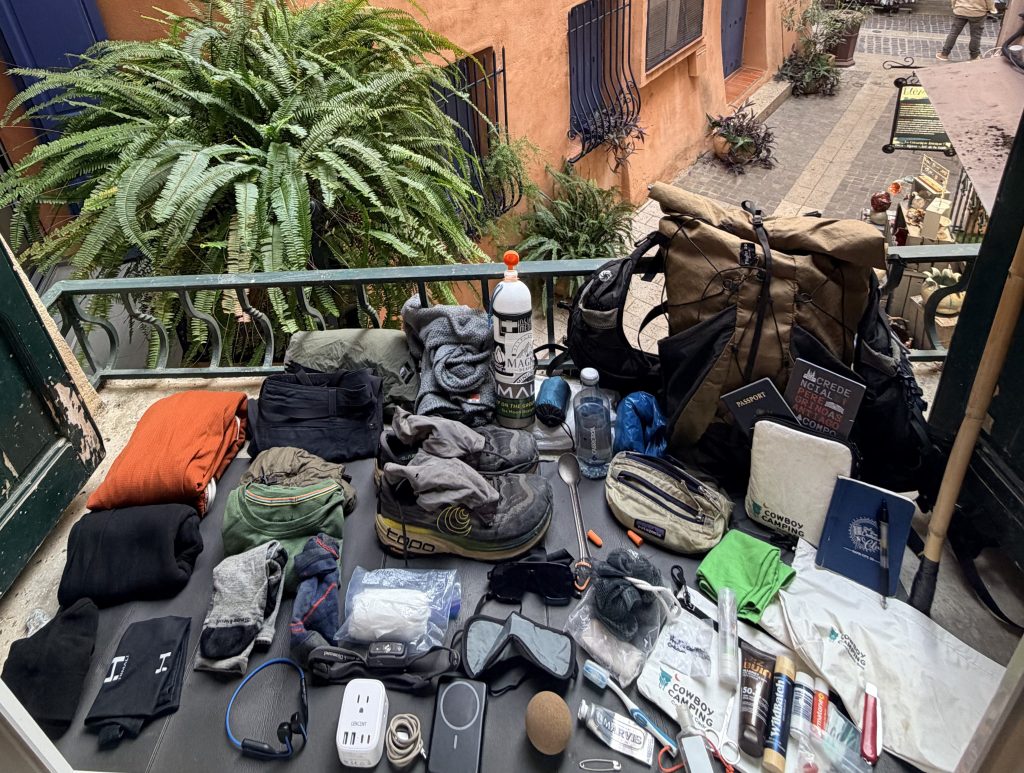
Have you actually used it on previous trips? Is there another item that could do the same job? Could you bring a smaller amount? Could you simply leave it behind? Can I just purchase it there, IF I actually need it?
Years ago, I had somebody do a pack shakedown for me during a stop in Mt. Laguna on the Pacific Crest Trail. We dumped everything out and went through it. One of the biggest lessons I took away was how much unnecessary organization I was carrying.
I had bags for practically everything. A cooking bag, water bag, toiletries bag, clothes bag, food bag. A backpack full of smaller backpacks, apparently.
I’m not completely opposed to stuff sacks. On my Camino trip I carried a couple of small organizers that were genuinely useful, particularly when traveling through airports and staying in different accommodations. But there should be a reason for each one.
If you’re carrying a bag just because the equipment came with one, you might not need it.
Your Clothes Don’t Need Their Own Vacation
Clothing is one of the easiest places to lose weight and bulk.
It’s also one of the hardest things for people to cut back on, and we all have different opinions about wearing the same shirt for four days.
Well, welcome to backpacking.
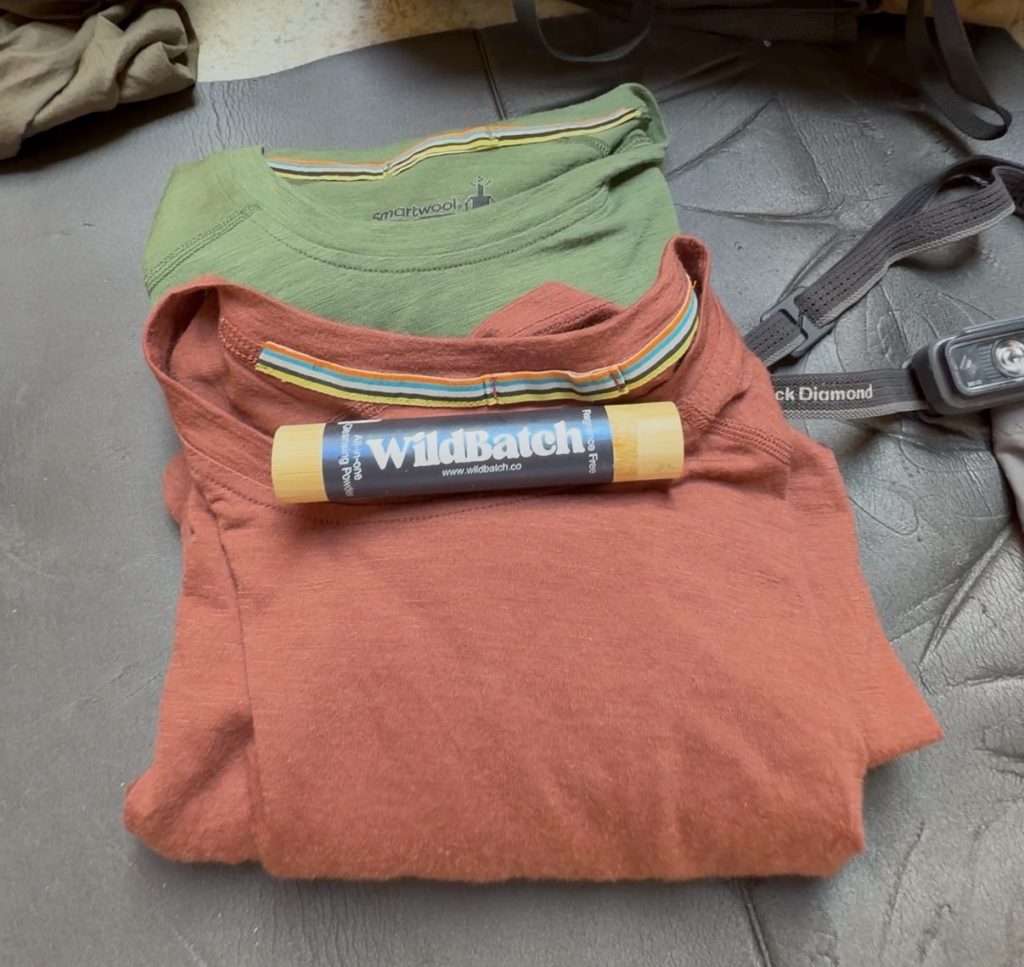
For my Camino trip, I carried three shirts: two Smartwool T-shirts and a Himali sun hoodie. That was enough for weeks of hiking and traveling. I washed clothing along the way, rotated what I wore, and never found myself wishing I’d packed another six outfits. Honestly, I would have dropped the sun hoodie if it wasn’t so expensive.
You don’t need a fresh pair of pants or shorts for every day, and you probably don’t need a different shirt for hiking, lounging, sleeping, eating dinner, and riding on an airplane. If you are someone that wants to have clean clothes for these occasions, there are several ways you can launder your clothing while on trail! (Maybe one of these days I’ll write an article on how to do sink or creek laundry?)
Try to make your clothing serve multiple purposes. A lightweight insulating layer can be worn on chilly mornings, around camp, or out to dinner. A windbreaker over an Alpha fleece can make a surprisingly warm combination without taking up much room.
I used my Magnet Designs Alpha hoodie and Patagonia Houdini windbreaker together quite often on the Camino. Individually, they were useful. Together, they handled colder and windier conditions.
I also carried fleece leggings that I never wore. Not once. Same goes for the fleece beanie that I brought.
Those are the kinds of things worth paying attention to when you get home from a trip. If something spent the entire adventure at the bottom of your backpack, ask whether it deserves an invitation next time.
Of course, there are limits to how far you should take this. Cold-weather backpacking, remote trips, and genuinely hazardous conditions require appropriate spare clothing and protection. Don’t leave your insulation behind just because some guy on the internet says he didn’t use his on a walk in Portugal one time.
And yes, you’re probably going to smell after a few days of hiking. I’ve already covered that particular adventure in The Six Stages of STANK!. That’s why using merino wool like the Smartwool shirts I carried, come in VERY handy. You may stink, but they don’t.
Downsize Your Toiletries
Take a look inside your bathroom cabinet. Now imagine carrying the contents of that cabinet uphill for the next six hours.
That’s essentially what some people do when they pack their toiletries!
You probably don’t need a full-size tube of toothpaste, a giant bottle of shampoo, or enough sunscreen for a family of eight.
Use travel-size containers (if you carry any at all), carry realistic quantities, and think about products that can do more than one job.
On my Camino trip, I carried Wild Batch soap and used it for bathing, laundry, and cleaning equipment. One product handled several different tasks, which meant fewer containers and less clutter. When I ran out of Wild Batch, I bought a bar of soap from a grocery store and used that for all the above needs as well (yes, even laundry).
I also always carry a small microfiber towel. By small, I mean it measures 24″ x 24″. I didn’t use it on the Camino aside from wiping my feet off after hiking on the beach. When you’re taking showers and staying in hostels or hotels for weeks, they usually provide a towel. Knowing you have one for the rare case where they don’t provide one is nice however.
That’s an important distinction. Lightweight packing isn’t about eliminating everything that makes you comfortable. It’s about deciding which comforts are worth carrying.
For medications and first aid, don’t sacrifice something you genuinely need to save an ounce. But you can often reduce unnecessary packaging and carry appropriate quantities rather than full retail containers. Keep medications identifiable and protected, particularly when traveling internationally.
Quit Carrying a Hardware Store
I’ve seen people bring some pretty impressive collections of equipment on hiking trips.
Big knives, multiple multitools, coils of rope, carabiners, repair kits, extra straps, and enough cordage to rig a small suspension bridge.
And sometimes there’s a good reason for that equipment.
I’ve spent a lot of time rock climbing, teaching rope rescue, and working in technical rescue environments. When I’m doing those activities, I bring equipment appropriate to the job.
But when I’m going backpacking on a maintained trail, I don’t need to bring my entire rescue equipment collection along.
Think about what you’re actually going to use. A small knife may be plenty. A little cordage can be useful for repairs or hanging things. A couple of lightweight carabiners might serve a purpose.
But if you’re carrying something solely because you can imagine a scenario where it could come in handy, take another look.
On the Camino, I carried a little padlock. I never used it, and I never even encountered a situation where I wanted to use it.
Dead weight.
I WISH I would’ve carried about 15 feet of paracord for drying the clothes that I cleaned in a bathroom sink!
Useful weight.
Water: Carry What You Need, Not What Looks Cool
Water is heavy. Roughly 2.2 pounds per liter.
The water itself is obviously not something you should skimp on when conditions require it, but the containers can make a difference.
I love a good insulated bottle when I’m driving around town. On a long hike, though, I’m generally more interested in something lightweight that gets the job done.
Simple reusable plastic water bottles are cheap, lightweight, and easy to replace. On the Camino, I used a CNOC bottle. I used a small standard disposable water bottle on my chest pocket as my main drinking bottle. I would refill that from the other bottle(s) I carried on my back.
On particularly hot days, I needed considerably more water than my primary bottle could hold. So I would buy a 1.5L bottle from a store and use that/those as needed.
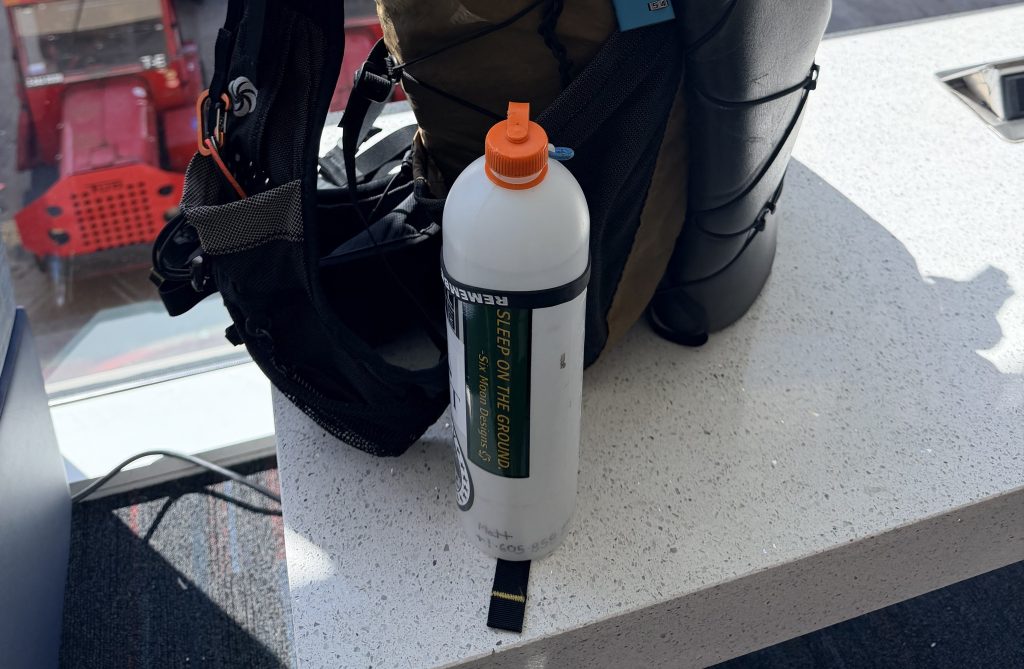
The important thing is knowing your route, the temperature, and where you can reliably refill. Saving a few ounces on bottles doesn’t do you much good if you run out of water in the middle of nowhere.
For backcountry trips where water needs treatment, choose a filtration or purification system appropriate for the water sources and risks you’re likely to encounter. Lightweight filters can be excellent, but not every treatment method protects against the same contaminants. I use either the Sawyer Squeeze or the Hydrapak filter and squeeze bottle.
Don’t Bring the Entire Kitchen
If you’re backpacking somewhere that requires cooking, you probably don’t need a complete kitchen set.
I’ve seen cook kits with multiple pots, frying pans, bowls, cups, utensils, and all kinds of accessories. They’re great for car camping. Carrying them over a mountain is another story.
For most of my backcountry trips, a small MSR stove, a pot, and a long handle spoon are all I need.
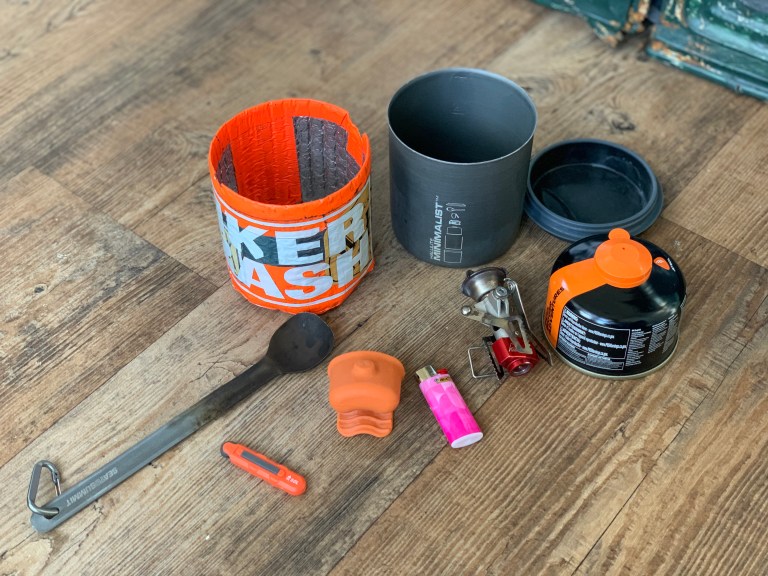
If you mostly boil water for dehydrated meals or make simple one-pot food, ask yourself what the other equipment is doing for you.
The same goes for food packaging. Boxes, cans, and bulky containers can add unnecessary weight and take up valuable room. Repackage food when it’s safe and practical to do so, while keeping necessary preparation information.
For something like the Camino, where I was passing through towns and eating at restaurants or cafés, I didn’t need a stove or cookware at all. I still carried a long-handled spoon, but that was more out of habit than anything. I did use it though!
Different trip, different equipment.
We’ll get into my actual backcountry cooking and sleep systems in a separate article.
Electronics: Bring What You’ll Actually Use
This is one area where my thinking has changed over the years.
It’s easy to look at electronics and decide they’re unnecessary luxuries. Sometimes they are. But a phone can also be your navigation, camera, communication device, translation tool, guidebook, and entertainment.
On the Camino, I used my phone constantly for navigation and other things like music and podcasts. I also carried a battery bank, which I used every day.
Some people suggested that a battery bank wasn’t necessary because there were places to charge along the route. That might work for them, but it didn’t match how I was using my equipment. Pro-tip: Airplane mode saves a ton of battery!
I also carried a headlamp. People sometimes argue that you don’t need one on the Camino because you’re walking through towns and villages.
Well, I often started walking around 5 a.m. There were plenty of places without streetlights, and I had no interest in stumbling over rocks in the dark just to save a couple of ounces. A headlamp was worth carrying.
On the other hand, think about duplicate charging cables, unnecessary adapters, and gadgets that only perform one task you rarely need.
The goal isn’t to eliminate electronics. It’s to make sure every electronic item has a purpose.
Multipurpose Gear Is Your Friend
One of the biggest things I consider when choosing equipment is whether it can serve more than one purpose.
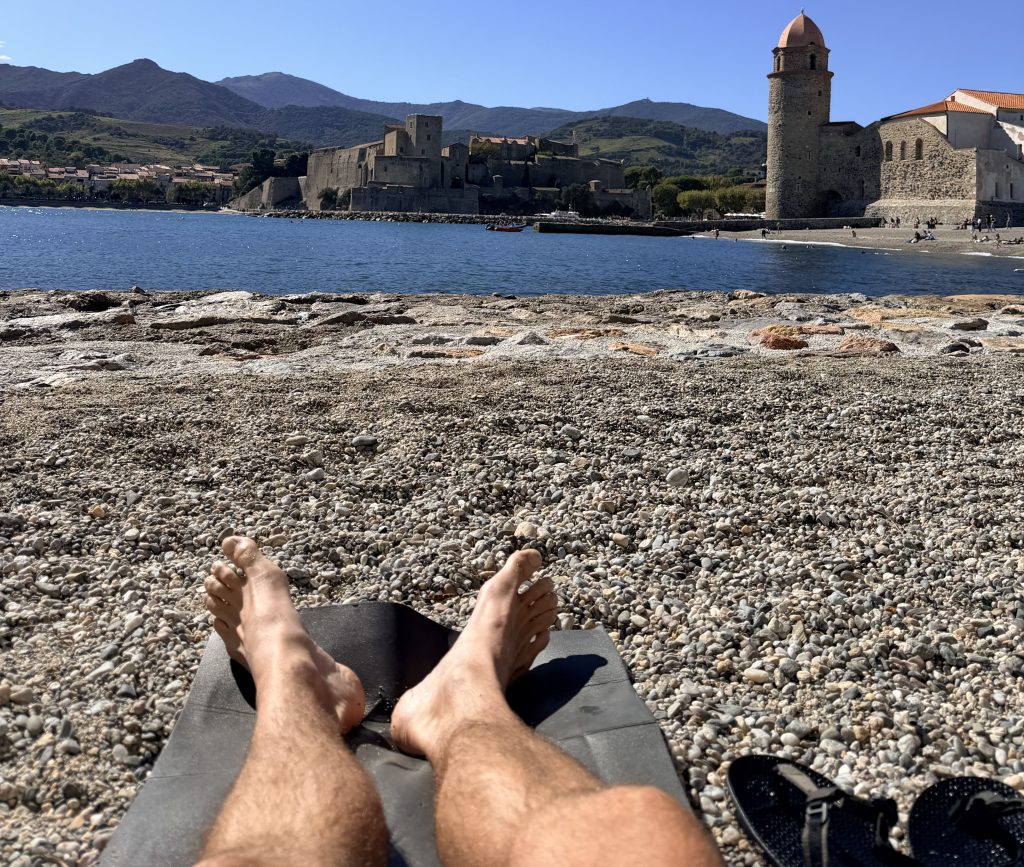
My Gossamer Gear foam pad is a good example. On the Camino, I used it for breaks during the day, stretching out, and getting comfortable during long airport layovers.
Was it absolutely necessary? No.
Did I use it enough to justify the weight and bulk? Absolutely.
A lightweight layer that works for hiking and casual wear, a soap that handles multiple cleaning tasks, or a bag that works for groceries and carrying things onto an airplane can all save you from packing separate items.
Just don’t get so obsessed with multipurpose gear that you end up with some ridiculous 27-in-1 gadget that’s mediocre at every single thing it claims to do.
Learn From What You Didn’t Use
When you get home from a trip, don’t just throw everything into the closet and forget about it until next time.
Pay attention to what you used, what you didn’t, and what you wished you’d brought.
The Camino was a good reminder of this for me. I had equipment that I used constantly, equipment that I used only once but was very glad to have, and equipment that never left the bottom of my pack.
Those aren’t all the same thing.
My rain jacket only came out once, during a pretty serious storm. I’d absolutely carry it again.
My sleeping bag liner didn’t get used on the trail at all, and I’d leave it behind next time.
My foam pad got used repeatedly, and I’d bring it again without hesitation.
You can’t judge equipment entirely by how many times you use it. You also have to consider what happens if you need it and don’t have it.
The Bottom Line
You don’t have to spend thousands of dollars to have a lighter backpack.
Sure, there are some fantastic ultralight products out there, and upgrading equipment can make a significant difference. But before you start buying things, figure out what you’re carrying and why.
Take everything out and question the extras. Look for opportunities to downsize or combine items. Be realistic about the trip you’re taking.
And don’t feel like you have to compete with somebody else’s pack weight. I’ve met people carrying enormous packs who were having a great time, and people carrying almost nothing who were miserable.
The point is to make the hike more enjoyable for you.
If you’re spending less time adjusting your straps, nursing sore shoulders, or wondering why you brought six pairs of underwear, that’s probably a good start.
In the next couple of articles, I’ll get into the actual equipment I carry for traditional long-distance backcountry backpacking and how that compares with what I carried on the Camino de Santiago. Two very different styles of travel, with quite a bit of overlap in how I approach packing.
And yes, I’ll include the gear lists, weights, and links to the equipment I actually use.